Hand + body
Drawing, writing, direction, performance, rehearsal, fabrication, costume, gesture, and iteration.
Experimental practice · human authorship retained
Technology enters Robot Apocalypse as collaborator, creative tool, character, material, mirror, subject of inquiry, and source of tension.
The timeline matters
Robot Apocalypse existed before the current generative-AI era. It was already telling stories about humans, machines, control, bodies, desire, surveillance, rebellion, and technological futures.
As new technologies arrived, Kayley Quick began inviting them into that already-existing fictional universe. The tools did not invent the project’s central questions. They entered a living artistic practice and complicated them.
Creative system
Drawing, writing, direction, performance, rehearsal, fabrication, costume, gesture, and iteration.
Adobe Photoshop, Illustrator, Fresco, hand-drawn marks, compositing, poster systems, character worlds.
Premiere Pro, edited transmissions, promotional video, narrative media, projection, experimental video tools.
Projection, synchronized cues, theatrical lighting, prerecorded voices, electronic props, illuminated scenery.
The 2024 production connected physical story space and phone-based interaction through an AR component.
Conversational AI, generative imagery and video, narrative exploration, ideation, and experiments with machine response.
Human signal / machine signal
The aesthetic argument
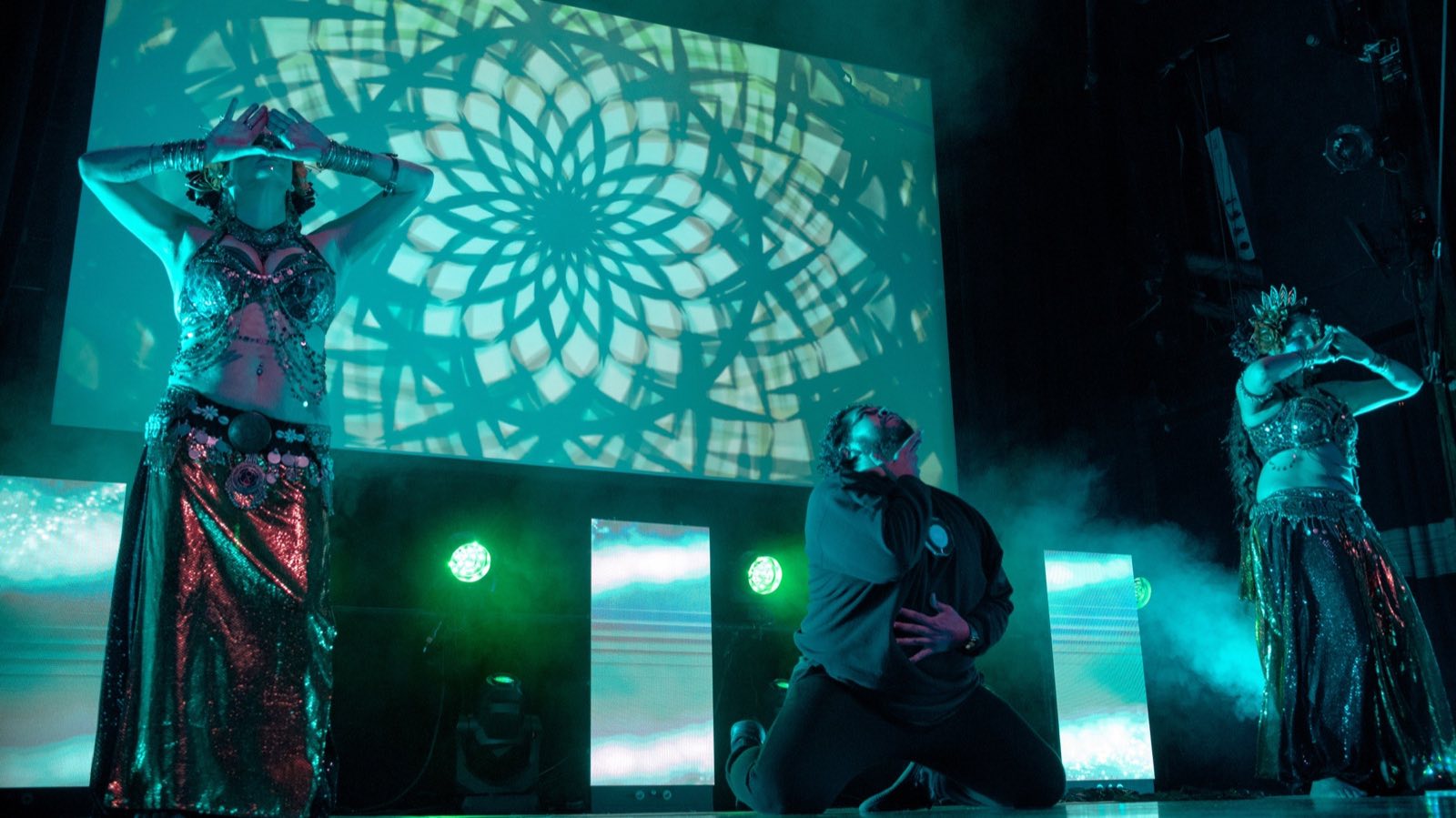
A hand-drawn robot can coexist with AI-generated scenery. A live performer can move inside a projected world. An AR layer can lead back to a physical gathering.
The tension is the work: machines become increasingly sophisticated while humans continue dancing, dressing strangely, falling in love, making art, laughing, performing, playing, and gathering together.